Why March and April Are the Only Months Worth Going to Morocco (And How Ramadan Changes Everything)
Every guide says avoid Morocco during Ramadan. That's the worst travel advice on the internet. Here's what actually happens — and a 10-day route.
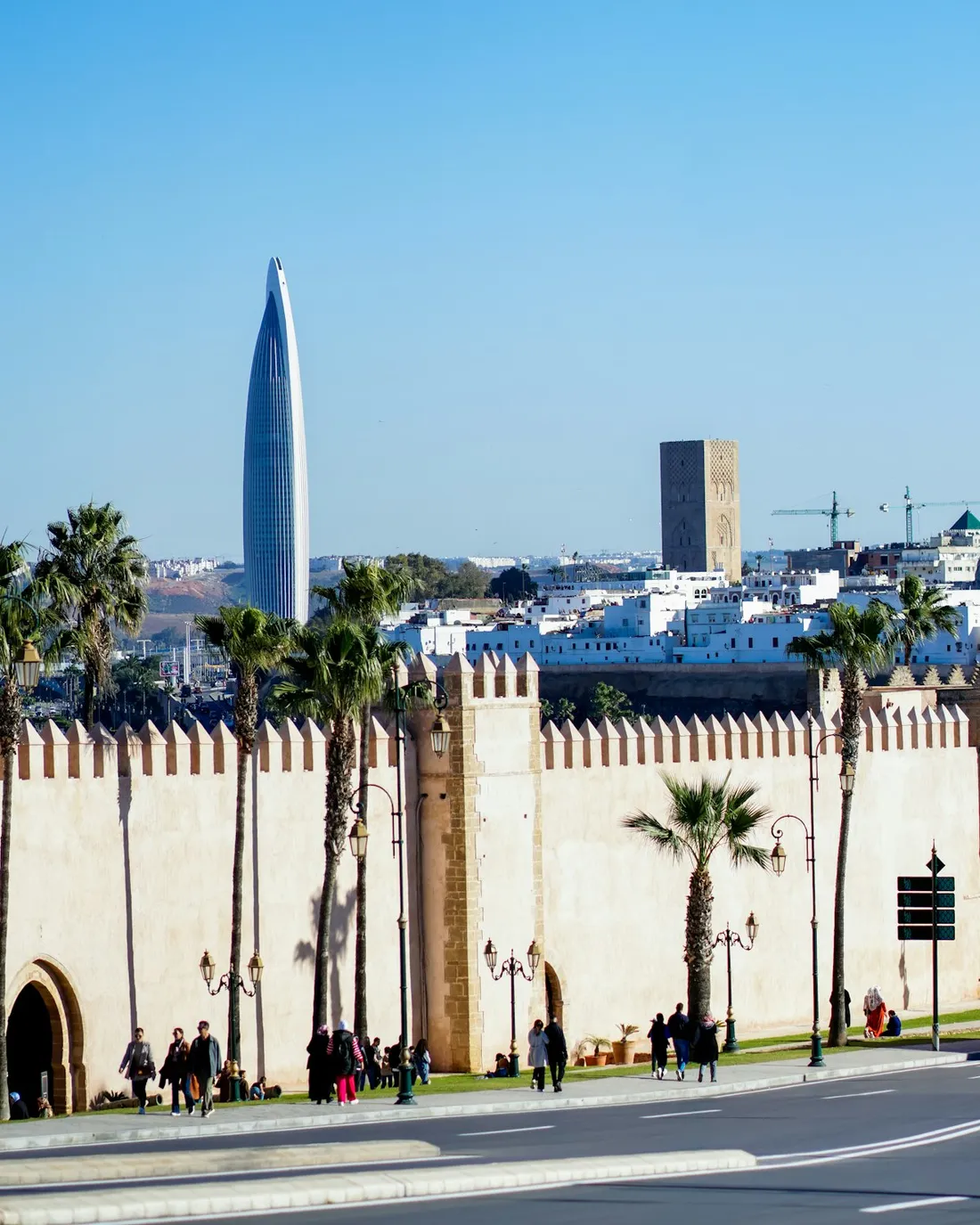
I arrived in Fès on the first night of Ramadan with no dinner reservation and no plan. This was, by every travel blog I’d read beforehand, a catastrophic mistake. “Restaurants close.” “The country shuts down.” “Schedule your trip around it.”
What actually happened: I spent 20 minutes talking to a man named Hassan at a pottery stall in the medina, mostly about glaze techniques and partially about where I was from, and he invited me to his family’s rooftop for Iftar. I stayed for three hours. His mother ladled out harira — this thick, turmeric-stained lentil and tomato soup with a squeeze of lemon that I can still taste when I think about it — and his sister kept refilling my plate with chebakia, these flower-shaped honey cookies dusted in sesame that shatter and then melt. I didn’t speak much Arabic. They didn’t speak much English. It didn’t matter even slightly.
That rooftop in Fès taught me more about Morocco in three hours than every “Ultimate Morocco Guide” I’d bookmarked. And it only happened because I showed up during Ramadan — the exact period every mainstream travel source told me to avoid.
The Problem With Every Morocco Guide You’ve Already Read
Here’s what you’ll find if you Google “best time to visit Morocco” right now: October and November. Maybe September. Every single guide says the same thing, and they’re all copying each other.
The logic isn’t wrong, exactly. Fall temperatures are comfortable. The summer heat has broken. Ramadan (if it falls in those months) has passed. It’s the safe, obvious answer.
It’s also the answer that sends every other tourist to the same places at the same time. Marrakech’s Jemaa el-Fnaa in October feels like Times Square with tagines. The riads are booked solid or jacked up 40-60% on price. The Sahara camps are full. The “secret” blue streets of Chefchaouen are shoulder-to-shoulder with people taking the same Instagram photo.
The guides also haven’t updated their Ramadan advice since approximately 2014. They treat it as a blanket warning — “things are closed, it’s inconvenient, go another time” — without distinguishing between what’s actually closed (some local lunch spots) and what’s spectacularly, unrepeatable open (the entire country’s most important communal meal, happening on every street, every evening, and you’re invited).
Why Late March to April Is the Window Most Travelers Completely Miss
The Atlas Mountains in late March are something nobody prepares you for. The almond trees are blooming — pale pink and white blossoms against red clay villages and snow-capped peaks behind them. The valleys are green. Actually green. If you’ve only seen photos of Morocco’s dry, ochre landscapes, the spring version will mess with your expectations.
Daytime temperatures in Marrakech sit around 24-28°C (75-82°F). Warm enough for a t-shirt, cool enough to walk the medina without feeling like you’re being slowly cooked. The Sahara is hot but not yet brutal — mid-30s instead of the 45°C+ that makes July and August genuinely dangerous. The Atlas passes are clear of snow but still have meltwater running through the valleys, which means the rivers and waterfalls near Ouzoud and in the Ourika Valley are at their best.
Tourist numbers are a fraction of fall. I walked through the tanneries in Fès with maybe six other visitors. In October, I’ve heard it’s closer to sixty. Riad prices reflect the difference — a gorgeous courtyard room in the Fès medina that goes for 800 MAD ($80) in November can be found for 400-500 MAD ($40-50) in March. Same room, same breakfast, same mint tea on the rooftop. Half the price, none of the crowds.
The light is different too, and I don’t say that to sound like a photographer cliché. Late afternoon in the Marrakech medina during spring has this golden, dusty quality — the sun comes through the gaps between buildings at a low angle and turns the sandstone walls the color of warm honey. It’s the best light I’ve seen anywhere in North Africa, and I’ve spent time in both Cairo and Tunis.
Should You Avoid Morocco During Ramadan? (The Honest Answer Is No)
The honest answer is that visiting during Ramadan is one of the best decisions I’ve made in four and a half years of travel.
Here’s what the “avoid Ramadan” advice gets right: during daylight hours, many local restaurants are closed. People who are fasting won’t eat, drink, or smoke in public from sunrise to sunset. The pace of life slows down, especially in the afternoons, when the streets get quiet and the heat compounds the hunger.
Here’s what it gets completely wrong: it frames all of that as a problem instead of an experience.
Yes, you’ll need to eat lunch at your riad or at a tourist-facing restaurant (there are plenty — nobody’s going to let you starve). Yes, some shopkeepers are less chatty at 3pm when they haven’t had water since dawn. That’s not a travel inconvenience. That’s a window into something real — a country observing a tradition that predates your trip by about 1,400 years.
And then the sun sets. And everything changes.
Iftar Hour: What Actually Happens on Medina Streets at Sundown
I want to describe this carefully because it’s the single most atmospheric hour I’ve experienced anywhere.
About thirty minutes before sunset, the medina goes quiet in a way that feels almost theatrical. The last shopkeepers pull down their metal shutters. The call to prayer begins — not from one minaret but from dozens, staggered by seconds, echoing off the walls until the sound seems to come from the stone itself.
Then: the smell. Harira — that lentil-tomato soup — is being made in every household, every restaurant, every street stall. The scent of cumin, turmeric, and simmering tomato fills the alleyways. It mixes with the charcoal smoke from grills being lit and the warm, yeasty smell of msemen — this flaky, layered flatbread cooked on griddles — hitting hot oil.
The streets empty because everyone is inside, sitting down together. If you’re walking through the medina at the exact moment of Iftar, you’ll hear it before you see it — the clink of glasses, the sound of soup being poured, a collective exhale that’s hard to describe but impossible to miss. Families eat together. Strangers eat together. And if you’re standing there looking even slightly lost, someone will wave you over.
The Iftar table follows a pattern. Dates first — always dates, usually with a glass of milk. Then harira, served steaming in small bowls. Chebakia on the side, dripping with honey and orange blossom water. Hard-boiled eggs. Msemen with butter and honey. Bread. More bread. The meal starts restrained and then becomes the most generous table you’ve ever sat at.
In Marrakech, Jemaa el-Fnaa transforms at Iftar into something the daytime tourist version can’t touch. The food stalls multiply. The smoke from dozens of grills creates a low haze. Bowls of harira are being passed around for 5-10 MAD ($0.50-1). Chebakia piled in golden pyramids at pastry stalls — 20 MAD ($2) for a bag that’ll last you three days. The atmosphere is celebratory in a way that’s hard to manufacture — it’s genuine relief and gratitude, and it spills over to everyone nearby, tourist or not.
After Iftar, the medina stays alive well past midnight. This is when the shopping happens, when the cafes fill up, when families walk the streets. Ramadan nights in Morocco are louder, busier, and more social than any regular evening. The “everything is closed” advice isn’t just wrong — it’s backwards. The best hours are after dark, and during Ramadan, the country runs on a nocturnal clock that suits travelers perfectly.
The Practical Calendar — What’s Open, What’s Closed, When to Arrive
Ramadan shifts about 10-11 days earlier each year on the Gregorian calendar. In 2026, it falls roughly mid-February to mid-March. In 2027, it’ll be earlier still. Check the exact dates for your travel year — they’re announced based on the lunar calendar and can shift by a day.
Here’s the practical breakdown nobody gives you:
What’s closed during daylight hours: Most local-facing restaurants, some small shops (they’ll reopen after Iftar), juice stalls in the medina.
What’s open during daylight hours: Riads and hotels (they’ll serve you breakfast and lunch), tourist restaurants in major cities, monuments and museums (most keep regular hours, some close 1-2 hours early), supermarkets, pharmacies, the major souks.
What changes after sunset: Everything opens. Street food stalls multiply. Restaurants serve until late. The medina becomes more alive than on any non-Ramadan night.
Practical tips that actually matter:
- Eat a big breakfast at your riad. Lunch options exist but are limited.
- Don’t eat, drink, or smoke while walking through public streets during fasting hours. You can eat at your accommodation or in a restaurant — just don’t do it openly on the street. It’s basic respect, and it takes zero effort.
- Schedule your desert tour and mountain trekking for the morning. Guides who are fasting will have more energy early.
- Plan your medina exploration for after Iftar. The post-sunset hours are when the souks are best anyway.
- Book Iftar at a restaurant if you want a structured experience — Nomad in Marrakech does a good one for about 200 MAD ($20), and Café Clock in Fès has a legendary Iftar menu for around 150 MAD ($15). But honestly, the best Iftars are the unplanned ones.
Where to Go (And What to Skip While Everyone Else Floods the Obvious Spots)
Fès over Marrakech for the medina experience. Look, I like Marrakech. The Jemaa el-Fnaa at dusk is worth seeing once. But Fès el-Bali — the old medina — is the one that’ll rearrange something in your brain. It’s the largest car-free urban area on earth, 9,000 alleyways, and GPS doesn’t work in most of it. You will get lost. That’s the point. The first time I walked into Fès el-Bali, I turned a corner and found a 700-year-old madrasa with zellige tilework so intricate it looked like it was breathing. There were four other people there. In Marrakech, that same level of craftsmanship comes with a ticket queue and a gift shop.
A solid riad in the Fès medina runs 350-600 MAD ($35-60) per night in spring. Dar Seffarine, right on the coppersmith square, is my pick — you fall asleep to the sound of hammers on brass, which sounds annoying and is actually the most specific, irreplaceable ambient noise I’ve encountered anywhere. If you’ve read my take on the Amalfi Coast, you know I’m always looking for the version of a famous place that hasn’t been smoothed down for mass tourism. Fès is that.
The Atlas Mountains are not a day trip. Every Marrakech tour operator sells “day trip to the Atlas Mountains” and it’s a scam of expectations, not money. You drive two hours, look at a waterfall, eat an overpriced tagine at a tourist restaurant, and drive back. That’s not the Atlas Mountains. The Atlas Mountains are spending two nights in Imlil (1,800m elevation), hiking the Azzaden Valley, eating in a Berber village where a woman makes rfissa — this shredded msemen in a lentil and chicken sauce spiced with fenugreek — in a pot over a wood fire. The almond blossoms in late March make the whole valley look like someone shook confetti over it.
Budget for Imlil: a guesthouse runs 200-350 MAD ($20-35) per night with dinner and breakfast included. A guide for a day hike costs about 400 MAD ($40). You don’t need one for the basic Imlil trails, but for the Azzaden Valley loop, it’s worth it.
Merzouga over M’hamid for the Sahara. Both are gateways to the dunes, but Erg Chebbi near Merzouga has the towering orange dunes — 150 meters high — that you’re picturing when you think “Sahara.” An overnight desert camp with camel trek, dinner, and sunrise runs 500-800 MAD ($50-80) per person depending on the camp. Luxury camps with private tents and actual toilets go up to 1,500-2,000 MAD ($150-200). I did the mid-range option and it was more than enough — the stars over the Sahara don’t care what you paid for your tent.
Skip Chefchaouen or give it one night max. I know. The blue city. It photographs beautifully. In person, it’s a two-street town that takes about three hours to fully explore, and every second person is posing for a photo against the same blue wall. If you’re passing through on the way to Fès, stay one night. Don’t make a special trip.
A 10-Day Route: Atlas Mountains First, Desert and Medina Last
Most itineraries start in Marrakech and treat everything else as side trips. That’s backwards. Start with the mountains and the desert while you’re fresh, end with the medinas when you’ve developed the confidence to actually enjoy them.
Days 1-2: Marrakech to Imlil (Atlas Mountains)
Fly into Marrakech. Don’t linger — grab a taxi to Imlil (about 90 minutes, negotiate 300-400 MAD or use a shared grand taxi from the Bab er-Rob station for about 50 MAD/$5 per person). Spend two nights. Hike the Azzaden Valley on day two. Eat tagine at your guesthouse — the lamb, prune, and almond version cooked in a clay pot over charcoal. The meat falls apart when you look at it. Spring in the Atlas smells like wild thyme and woodsmoke, and the air at 1,800 meters hits your lungs like cold water.
Days 3-4: Imlil to Ouarzazate via Tizi n’Tichka Pass
The Tizi n’Tichka pass is one of the great mountain drives in the world — hairpin turns at 2,260 meters with views that make you carsick and awestruck simultaneously. Stop at Aït Benhaddou, the ksar (fortified village) that’s been in every desert movie you’ve ever seen. It’s touristy but genuinely impressive — the earthen architecture is UNESCO-listed and the light at sunset turns the whole structure copper. Stay in Ouarzazate — it’s not exciting, but it’s a good transit point. Budget hotel: 200-300 MAD ($20-30).
Days 5-6: Ouarzazate to Merzouga (Sahara)
Drive the Dadès Valley, stop at the Todra Gorge (the 300-meter canyon walls are worth an hour), continue to Merzouga. Book your desert camp in advance — I used Sahara Stars Camp, mid-range, and the camel trek at sunset was the postcard moment you’re hoping for. Wake up at 5am for sunrise over the dunes. It’s cold at dawn in the desert, even in spring — bring a jacket. The silence is the thing nobody mentions. No engines, no phones, no music. Just wind and sand.
Days 7-8: Merzouga to Fès
This is a long travel day — about 8 hours by road. You can split it with a night in Midelt or Ifrane, or just push through. I pushed through, regretted it by hour six, and then forgot my regret the moment I walked into the Fès medina at dusk. If your trip overlaps with Ramadan, time your arrival for late afternoon. Watch the medina prepare for Iftar. Let yourself get pulled into it.
Spend two full days in Fès. Get lost in the medina on purpose — put your phone away and just walk. Visit the Chouara Tannery early morning when the dye vats are being filled — the smell is aggressive (they’ll hand you mint to hold under your nose, take it) but the visual is staggering: these stone vats of saffron yellow, poppy red, and indigo blue that have been in continuous use since the 11th century. Eat a tanjia at a hole-in-the-wall near Bab Boujloud — it’s a slow-cooked meat pot sealed with parchment and cooked in the embers of a hammam furnace. The meat is so tender it barely holds together.
Days 9-10: Fès (or Day Trip to Meknes/Volubilis)
Use one day for the Fès medina’s deeper layers — the Bou Inania Madrasa, the Nejjarine Museum of Wooden Arts, the spice market near Attarine. Use the second for a day trip to Meknes (45 minutes by train, 25 MAD/$2.50) and the Roman ruins at Volubilis — they’re genuinely impressive and almost empty in spring. If you’re connecting onward to Europe, Fès has direct budget flights. Check the European train routes guide for connecting through Spain — Ryanair does Fès to Madrid for as low as 300 MAD ($30).
The Budget
For 10 days in spring, here’s what you’re actually looking at:
| Category | Daily Budget | 10-Day Total |
|---|---|---|
| Accommodation (riads, guesthouses) | 350-500 MAD ($35-50) | 3,500-5,000 MAD ($350-500) |
| Food (mix of street food and restaurants) | 150-250 MAD ($15-25) | 1,500-2,500 MAD ($150-250) |
| Transport (shared taxis, buses, one desert transfer) | 100-200 MAD ($10-20) | 1,000-2,000 MAD ($100-200) |
| Desert camp (one night) | — | 600-800 MAD ($60-80) |
| Activities (guides, entrance fees) | 50-100 MAD ($5-10) | 500-1,000 MAD ($50-100) |
| Total | 7,100-11,300 MAD ($710-1,130) |
That’s $70-110 a day for a country with thousand-year-old cities, Saharan dunes, and food that makes you close your eyes at the table. If you want to know how to travel this kind of route on a lean budget, the principles in my weekend city breaks guide apply — eat where locals eat, book direct with guesthouses, and take shared transport whenever possible.
What Nobody Tells You
The afternoon quiet during Ramadan is a gift, not a limitation. The medina empties out around 2-3pm. The light is soft. The cats are everywhere. You can photograph the alleyways of Fès without a single person in frame, which on any normal day is physically impossible. I got my best shots of the entire trip during those quiet afternoon hours when every guide said “nothing is happening.”
And the generosity during Ramadan isn’t performative — it’s structural. Sharing food at Iftar is a religious obligation, and Moroccans take it seriously. I was invited to eat by strangers four separate times in ten days. Not because I looked pathetic (though I might have). Because that’s what you do.
Yes, you’ll need to adjust your rhythm. You’ll eat a bigger breakfast, explore in the mornings, rest in the afternoons, and come alive after dark. You know what that sounds like? It sounds like every Mediterranean country I’ve spent time in. Somehow nobody tells you to avoid Spain because people nap after lunch.
Book the flights. Go in late March or April. If Ramadan overlaps — and in the next few years, it still will — don’t work around it. Lean into it. The rooftop Iftar you stumble into will be the story you tell for years, and no “Ultimate Morocco Guide” will have prepared you for how it feels to break bread with strangers who’ve been waiting all day for this exact moment.
That moment isn’t an inconvenience. It’s the whole point.