Montreal in Spring 2026: The Best-Value City Break in North America Nobody Is Talking About
The Olympics turn 50 this spring and Montreal is celebrating all season. Right neighborhoods, food scene, and timing — no tourist pricing.
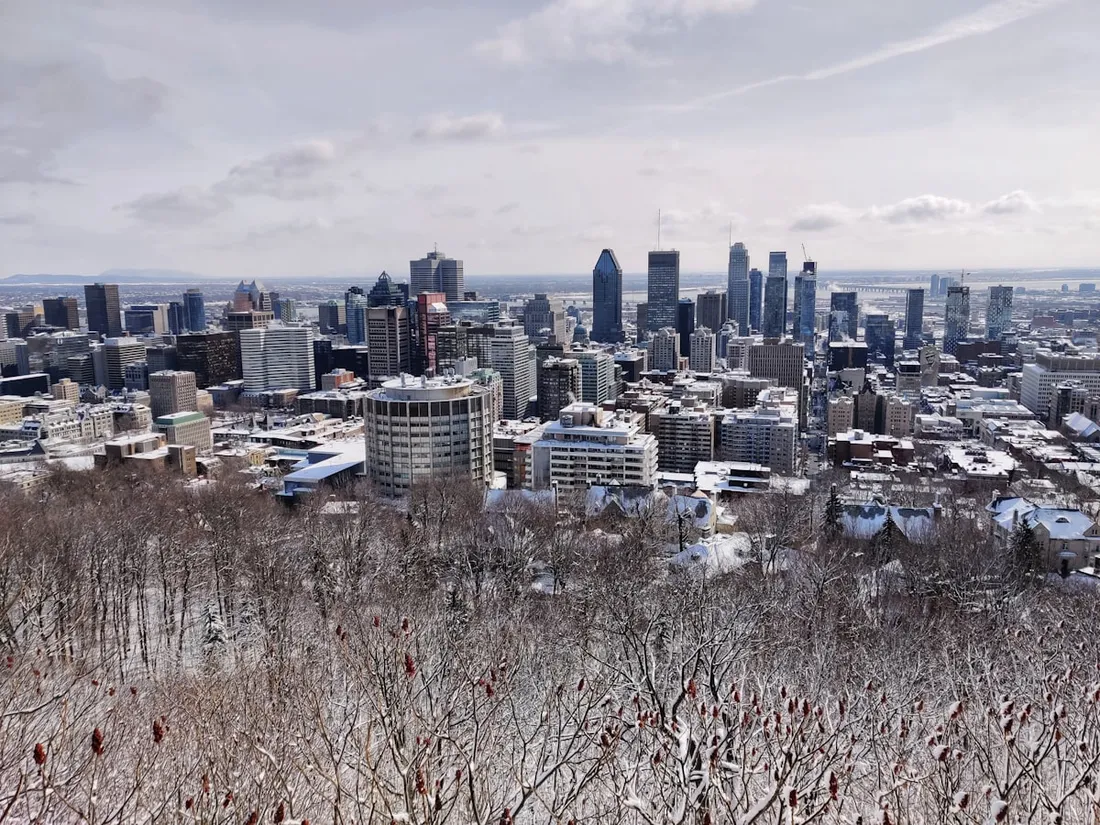
I nearly booked Edinburgh. Same price range, same long-weekend vibes, same “I should go there eventually” energy I’d been sitting on for two years. Then I checked one more flight and found Montreal-Trudeau for $190 less. Figured I’d try something different. That was three trips ago, and I’ve recommended it to every person who’s asked me where to go since. Every single one of them comes back saying the same thing: why doesn’t anyone talk about this city?
Here’s the honest answer — people don’t talk about Montreal because they’re too busy booking Paris for the croissants, New York for the food scene, or some overpriced European city break that’ll cost them $300 a night before they’ve eaten a single meal. Montreal delivers equivalent food culture, better walkability, and the creative energy of a city that hasn’t been flattened by over-tourism. For about 60% of the cost. It isn’t underrated. It’s actively ignored.
Spring 2026 is the sharpest window to fix that, and not just because of the weather.
Why Does Everyone Book Paris When Montreal Is Sitting Right There?
Look, I love Paris. I’ve eaten well there. But I’ve also paid €18 for a café crème and a croissant on a sidewalk where the waiter visibly resented my existence. Montreal gives you the French-speaking atmosphere, the café culture, the patisseries, the wine — and then it does something Paris stopped doing a long time ago: it actually wants you there.
The exchange rate alone should end the conversation. One US dollar gets you about C$1.36 right now, which means your money stretches in a way it simply doesn’t in the eurozone. A dorm bed in a good Montreal hostel runs C$35-48 ($26-35 USD). A plate of smoked meat at Schwartz’s — the most famous deli in the country — is C$16.25 ($12 USD). A dozen wood-fired bagels, still warm, from a bakery that’s been open since 1919, costs you C$12 (~$9 USD).
Flights from the US northeast start around $79 one-way. Boston, New York, Chicago — you’re looking at 90 minutes to two hours in the air. April is statistically the cheapest month to fly. Thursday departures save you roughly 16% over Sunday. This isn’t a bucket-li — this isn’t aspirational. This is a cheap flight and a long weekend.
And here’s what nobody tells you: Montreal has more restaurants per capita than any other city in North America. Not just quantity — range. BYOB restaurants where you grab a bottle from the dépanneur on the corner and pay zero corkage. Late-night diners. A bagel war that’s been raging for over a century. A public market that makes most European equivalents feel like tourist traps.
If you’ve been saving up for a Paris trip, go to Montreal first. You’ll eat better, spend less, and actually enjoy the language barrier instead of dreading it.
The 50th Olympic Anniversary: What’s Actually Happening This Spring
2026 marks 50 years since Montreal hosted the 1976 Summer Olympics, and the city’s not letting it pass quietly. Parc Jean-Drapeau — the island park that served as the Games’ epicenter — is running anniversary programming all year, with outdoor installations and events that shift with the seasons. Spring gets the early wave: think public art, historical exhibits, and community events spread across the park’s grounds, all free or cheap.
A couple of honest caveats. The Olympic Tower — that iconic leaning structure you’ve seen in every Montreal photo — is closed for a full renovation and won’t reopen until 2027. They’re installing a new glass-enclosed cable car and a rooftop walkway, which sounds genuinely worth the wait, but it means you can’t go up in 2026. Don’t let anyone sell you outdated info on that. The Biodome, Planetarium, and Botanical Garden in the Olympic Park complex are still very much open and worth a half-day, especially the Biodome if you’re traveling with kids or just want something weird and wonderful for C$25 (~$18 USD).
The big-ticket sports event — the UCI Road World Championships — doesn’t hit until September, so spring visitors won’t catch that. What you will catch is the anniversary energy filtering into the rest of the city: pop-up exhibits, photo archives in gallery windows, and a general civic pride that makes Montrealers even more eager to tell you about their city. I’ve never met a population more ready to give you their personal top-five restaurant list unprompted.
The real spring events worth planning around: the Plural Contemporary Art Fair (April 10-12) brings galleries from Montreal, Toronto, and New York to the Grand Quai. Festival Art Souterrain (late April through early May) turns Montreal’s Underground City into a self-guided art walk — it’s free, it’s bizarre, and it’s one of the most original things I’ve done in any city. Blue Metropolis literary festival runs April 23-26 with several free events. And Piknic Électronik kicks off at Parc Jean-Drapeau in May — outdoor electronic music on Sunday afternoons, cheap entry, locals outnumbering tourists ten to one.
Plateau-Mont-Royal and Mile End: Your Escape Route from Tourist Pricing
Old Montreal is fine. The cobblestones are nice. The buildings are handsome. The restaurants will also charge you a 40% premium for the privilege of eating next to someone taking a photo of their crêpe. Do one walk through, maybe grab a coffee at Crew Café in the old bank building because the interior is stunning, and then get out.
Your base should be the Plateau-Mont-Royal or Mile End. These aren’t “alternative” neighborhoods — they’re where the city actually lives. The Plateau runs along Boulevard Saint-Laurent and Rue Saint-Denis, packed with independent shops, depanneurs on every corner, and the kind of restaurants that don’t need a street-level sign because the locals already know. Mile End, technically part of the Plateau but with its own distinct personality, covers about ten blocks of artist studios, coffee roasters, vintage shops, and two of the most famous bagel bakeries on earth.
I stayed in the Plateau on my first trip and didn’t leave the neighborhood for two full days. Not out of laziness — out of not needing to. Breakfast was a sesame bagel from Fairmount Bagel on Avenue Fairmount, still hot from the wood-fired oven, eaten on the sidewalk at 8am because the place is open 24 hours and there’s no seating anyway. Lunch was a smoked meat sandwich from Main Deli on Saint-Laurent — less famous than Schwartz’s across the street, shorter line, and the old-timers will tell you it’s better. (I’m not picking a side on that. I’m just telling you the line at Main is five minutes and the line at Schwartz’s is forty-five.) Dinner was a three-course meal at a BYOB on Rue Duluth where I’d grabbed a C$15 bottle of wine from the dep next door and the total bill, wine included, came to C$55 (~$40 USD).
The streets here are colored row houses — red, blue, green, yellow — with exterior staircases that twist up to second and third floors. In spring, when people start sitting on those staircases with coffee and books, the whole neighborhood looks like a film set that hasn’t been art-directed because it doesn’t need to be.
Accommodation in the Plateau/Mile End: Airbnbs and small guesthouses run C$80-120/night ($59-88 USD) for a private room. If you’re on a tighter budget, M Montreal and HI Montreal are both solid hostels with dorm beds at C$35-48/night ($26-35 USD), though HI is in the Old Port area. For the Plateau specifically, check smaller listings — the neighborhood rewards staying in a real apartment on a real block over a hotel lobby. This is the kind of place where you want to buy groceries and cook one meal, just to use the kitchen at your rental. If you’re doing this trip solo, the Plateau is the move — the café culture means you’re never actually alone, and the neighborhood bar scene is approachable without being aggressive.
The Food Scene That Makes Paris Feel Overpriced
I’m going to say something that’ll annoy people: Montreal’s food scene is more interesting than Paris right now. Not better in every category — nobody’s touching a perfect Parisian croissant, and I won’t pretend otherwise. But for variety, accessibility, value, and the sheer density of places where you can eat extraordinarily well for under $15? Montreal wins, and it’s not particularly close.
Start at Jean-Talon Market in Little Italy. It’s one of the largest open-air markets in North America, and in spring it transforms — maple everything in late April, the first outdoor stalls opening, vendors shouting across aisles. The indoor shops run year-round: cheese counters, charcuterie, spice merchants, a fishmonger who’ll explain exactly what’s fresh that morning if you ask. Grab lunch here. A bowl of soup and a sandwich from one of the stall counters runs C$12-15 (~$9-11 USD). The orange metro line drops you at Jean-Talon station, five-minute walk.
The bagel situation requires a brief orientation. Montreal bagels aren’t New York bagels. They’re smaller, denser, sweeter — boiled in honey water, baked in a wood-fired oven, and best eaten within an hour of coming out. Fairmount Bagel (open 24/7 since 1919) and St-Viateur Bagel (since 1957) are three blocks apart in Mile End, and Montrealers will fight you over which is better. Buy a half-dozen from each — C$6-7 (~$4-5 USD) per half-dozen — and conduct your own research. Eat them plain. They don’t need cream cheese. The sesame is the canonical order.
The smoked meat tradition runs through Schwartz’s on Saint-Laurent, where the line is part of the experience and the medium-fat sandwich on rye with yellow mustard is non-negotiable. But here’s what I tell everyone: walk across the street to Main Deli, order the same thing, sit down immediately, and save yourself forty-five minutes of standing on a sidewalk.
Now the real secret — Montreal’s BYOB restaurant culture. Dozens of restaurants across the Plateau, particularly along Rue Duluth and Rue Prince-Arthur, are “apportez votre vin” — bring your own wine. No corkage fee. You stop at a dépanneur, grab a decent bottle for C$12-18 ($9-13 USD), and sit down to a three-course dinner that would cost double in any other city once you added the wine markup. Le Quartier Général does refined Québécois cooking with local ingredients. La Prunelle on Duluth has been doing bistro-style seasonal food since 1999. Le P’tit Plateau is a tiny room with duck confit and foie gras at prices that’d make a Parisian restaurateur weep. Your total for a full dinner with wine at any of these places: C$45-65 ($33-48 USD) per person. In Paris, that’s your appetizer.
| Category | Daily Budget (CAD) | Daily Budget (USD) |
|---|---|---|
| Hostel dorm / budget room | $35-48 | $26-35 |
| Food (3 meals, mix of market/street/restaurant) | $35-55 | $26-40 |
| Transit (STM day pass) | $11.25 | $8.30 |
| Coffee & drinks | $10-18 | $7-13 |
| Daily total | $91-132 | $67-97 |
That’s a legitimate city break budget. Not “roughing it” — eating well, moving freely, having a glass of wine with dinner. Try that math in Paris or New York and see where it lands.
Practical French: What Actually Matters for English-Only Travelers
Yes, Montreal is French-speaking. No, this shouldn’t scare you.
I’ve spent time in places where the language barrier was genuinely hard — trying to communicate a food allergy in rural Japan, attempting to explain a plumbing emergency to a landlord in Medellin with my mid-tier Spanish. Montreal isn’t that. It’s officially bilingual, and in practice, almost everyone in the service industry speaks English fluently. You’ll hear French on the street, the menus are in French, the metro announcements are in French — but the moment you open your mouth in English, people switch without missing a beat.
That said, starting in French matters. Not because people won’t help you otherwise, but because it changes the interaction. A “bonjour” before you ask your question gets you a warmer response than diving straight into English. This is the whole thing Anglophones get wrong about Montreal — it’s not that you need to speak French, it’s that you need to acknowledge it exists.
The only phrases you actually need:
- Bonjour — hello, obviously, but also: use it when you walk into any shop, any restaurant, any bar. Always.
- Merci — thank you. You know this one.
- L’addition, s’il vous plaît — the bill, please. Gets you out of any restaurant.
- Un dépanneur — a convenience store. You’ll be looking for one to buy wine for your BYOB dinner. Pronounced roughly “day-pan-URR.”
- Je suis désolé, je ne parle pas français — I’m sorry, I don’t speak French. You’ll butcher it. They’ll smile. It’s the trying that counts.
What nobody tells you: the Quebec accent is different from Parisian French, and actual Parisians sometimes struggle with it too. So if you took French in high school and can’t understand a word anyone’s saying — that’s not your fault. The local dialect is its own thing, peppered with expressions that don’t exist in textbook French. Don’t stress about it. Point at menus. Use gestures. Montrealers are, in my experience, the friendliest urban population in North America. They’ll meet you wherever you are.
What to Book Early — and What to Leave Open on Purpose
Book your flight and accommodation early. April flights from the US northeast are cheapest, and the Plateau/Mile End Airbnb market gets competitive once spring hits. Two to three months out is the window. Book the flight on a Thursday departure if you can swing it — the savings are real.
Book one nice dinner. Pick a BYOB on Duluth, make a reservation for your second night (you’ll want your first night to be casual — bagels, smoked meat, getting your bearings), and stop at the dep beforehand.
Book nothing else.
I’m serious. Montreal is a city that rewards unplanned afternoons more than almost anywhere I’ve been. My best day there started with zero agenda — I walked from Mile End down to the Plateau, stopped at Café Olimpico on Saint-Viateur because there was a line out the door and that’s usually a good sign (it was — the espresso was perfect and the room was full of people who clearly came here every morning), then wandered south until I found a park, sat in it for an hour, and ended up at a Vietnamese spot on Saint-Laurent I’d never heard of that served a pho that briefly made me forget about that 4am roadside bowl in Sapa. Briefly.
The spring festivals — Art Souterrain, Plural, Blue Metropolis — don’t require advance booking. Show up. Piknic Électronik tickets are cheap and available day-of until late May.
Leave room for the Jean-Talon Market on a Saturday morning. Leave room for getting lost in the Plateau’s side streets. Leave room for sitting on someone’s stoop with a bagel and a coffee watching the city wake up. If your Montreal itinerary is fully scheduled, you’re doing it wrong.
The Spring Window: Best Weeks and What to Avoid
Let me be honest about March: it’s still winter. Average highs hover around 1°C (34°F) and the sidewalks can be icy. If someone tells you “Montreal in March is spring,” they haven’t been to Montreal in March. It’s gray, it’s cold, and the city is beautiful but it’s bundled up. I wouldn’t recommend it for a first visit unless you genuinely enjoy winter cities.
The sweet spot is late April through late May. By the last week of April, the temperature is climbing past 10-15°C (50-60°F), the terrasses (outdoor patios) start opening across the Plateau, and the city undergoes this visible exhale — everyone’s outside, everyone’s lighter, the parks fill up. Jean-Talon Market starts its outdoor season. The festival calendar kicks in. The light lasts past 8pm.
Early May is the sharpest value window. Flights are still priced at spring rates but the weather’s turning genuinely warm. Piknic Électronik launches its season. Café Collectif (May 1-3) is worth hitting if you care about specialty coffee. Pizza Week happens in May — restaurants across the city compete for the best pie, which is exactly as fun as it sounds.
Avoid Victoria Day weekend (late May) if you want the budget version. It’s a Canadian holiday, hotel prices spike, and the city fills up with domestic travelers. The week before or after is the same weather at 30% less cost.
One more thing: pack layers. Montreal spring is a liar. You’ll get a 20°C afternoon followed by a 5°C morning, sometimes in the same day. Bring a light jacket you can stuff in your bag. I’ve said it before and I’ll say it again — one bag, everything fits.
Montreal doesn’t need a marketing campaign. It doesn’t need to be “discovered.” It’s a major North American city with a food culture that punches alongside cities twice its size and three times its price. The fact that most Americans have never seriously considered it for a long weekend is, frankly, a gift — it means the restaurants aren’t overrun, the neighborhoods aren’t performing for tourists, and a C$15 bottle of wine at a BYOB dinner still feels like getting away with something.
Go before everyone else figures it out. Fly on a Thursday. Stay in the Plateau. Eat the bagel plain.