Driving Iceland's Ring Road in September
Waterfalls, black sand beaches, and empty highland roads. Why shoulder season is the best time to circle Iceland.
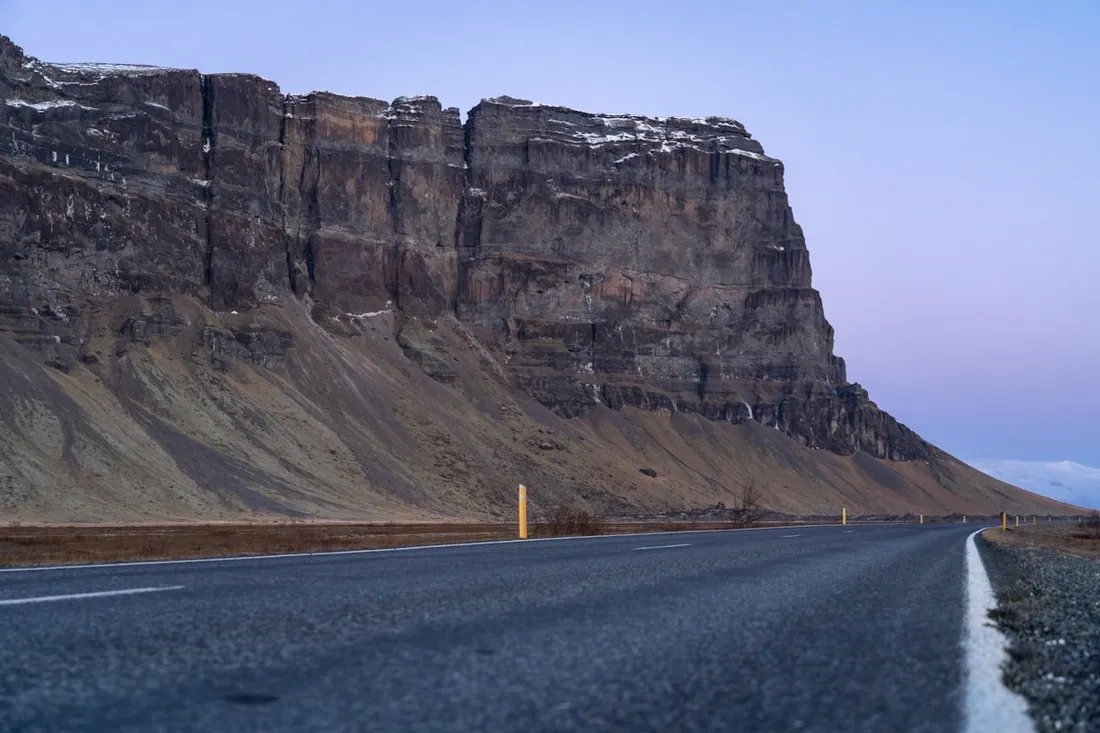
September in Iceland is a gamble, and that’s exactly why it works. The summer crowds are gone. The highland roads are still open — barely. The northern lights start appearing. And the landscape shifts into autumn colors that nobody tells you about: rust-orange moss, golden birch scrub, purple heather across lava fields.
The Ring Road — Route 1 — loops 1,322 kilometers around the entire island. Most people drive it in 7–10 days. You could do it in less, but you’d miss the reason to come.
The Route, Counterclockwise
Driving counterclockwise from Reykjavik means you hit the South Coast first, when you’re still awed by everything, and save the empty, moody Westfjords-adjacent north coast for later when the novelty of waterfalls has worn off and you’re ready for something starker.
South Coast (Days 1–3)
This is the greatest hits section, and it earns the reputation. Seljalandsfoss, where you walk behind the waterfall. Skógafoss, where the spray hits you a hundred meters away. Reynisfjara black sand beach with its basalt columns and sneaker waves.
The trick is timing. Start driving from Vik at sunrise. You’ll hit Reynisfjara before the bus tours, and the morning light on the black sand and sea stacks is unlike anything else.
Glacier lagoon at Jökulsárlón is the emotional peak. Icebergs calve off the glacier and float through a lagoon to the ocean, where they wash up on a black sand beach. It sounds like something from a documentary, and in person it’s better.
East Fjords (Days 3–5)
This is where the crowds thin out. The east coast is a series of narrow fjords with small fishing towns tucked into each one. The driving is slow — mountain passes between fjords, single-lane tunnels, sheep on the road.
Stop in Seyðisfjörður, a town of 700 people with rainbow-painted streets and a blue church at the end of the main road. It’s where the ferry from Denmark arrives, and it has a creative energy that doesn’t match its size.
North (Days 5–7)
Akureyri is Iceland’s second city, which means it has two bookstores and a botanical garden. It’s a good base for the Mývatn area — a volcanic lake surrounded by lava formations, steam vents, and natural hot springs.
The Mývatn Nature Baths are the local alternative to the Blue Lagoon. Fraction of the price, fraction of the tourists, same milky blue water with a view of volcanic craters.
West and Back to Reykjavik (Days 7–9)
The Snæfellsnes Peninsula is sometimes called “Iceland in miniature” because it packs glaciers, lava fields, beaches, and a volcano into a single arm of land. Kirkjufell — the mountain with the waterfall in front — is here.
What You Actually Need
A 4WD rental. Even if you’re sticking to Route 1, the gravel roads to trailheads and hot springs require clearance. Budget $100–150/day in September for a decent SUV.
Layers, not bulk. The weather changes every twenty minutes. A merino base layer, a fleece, and a waterproof shell handle everything from 4°C rain to 14°C sunshine. Skip the heavy winter gear — September isn’t winter yet.
A camp stove or grocery plan. Restaurant meals in Iceland are expensive ($30–50 per person for something basic). The budget move is shopping at Bónus supermarkets and cooking at guesthouse kitchens or campsites.
Sleeping
Mix of guesthouses and campgrounds works best. Guesthouses run $120–200/night for a double room with shared bathroom. Campgrounds are $15–20/person and most stay open through mid-September.
Book the south coast accommodation in advance — it fills up even in shoulder season. The east and north you can often find night-of.
September-Specific Tips
The northern lights appear starting in late August, but September gives you longer dark windows. Download an aurora forecast app and keep your expectations flexible — some trips you’ll see them every night, others not at all.
Daylight drops from about 14 hours at the start of September to 12 by the end. That’s still plenty of driving and hiking time, and the lower sun angle makes everything more photogenic.
Some highland interior roads (F-roads) close in mid-to-late September depending on weather. If you want to drive Landmannalaugar or the Kjölur route, go in the first week.