The Best Fall Foliage Road Trips in North America
The best drives for peak autumn color, from New England classics to routes nobody talks about.
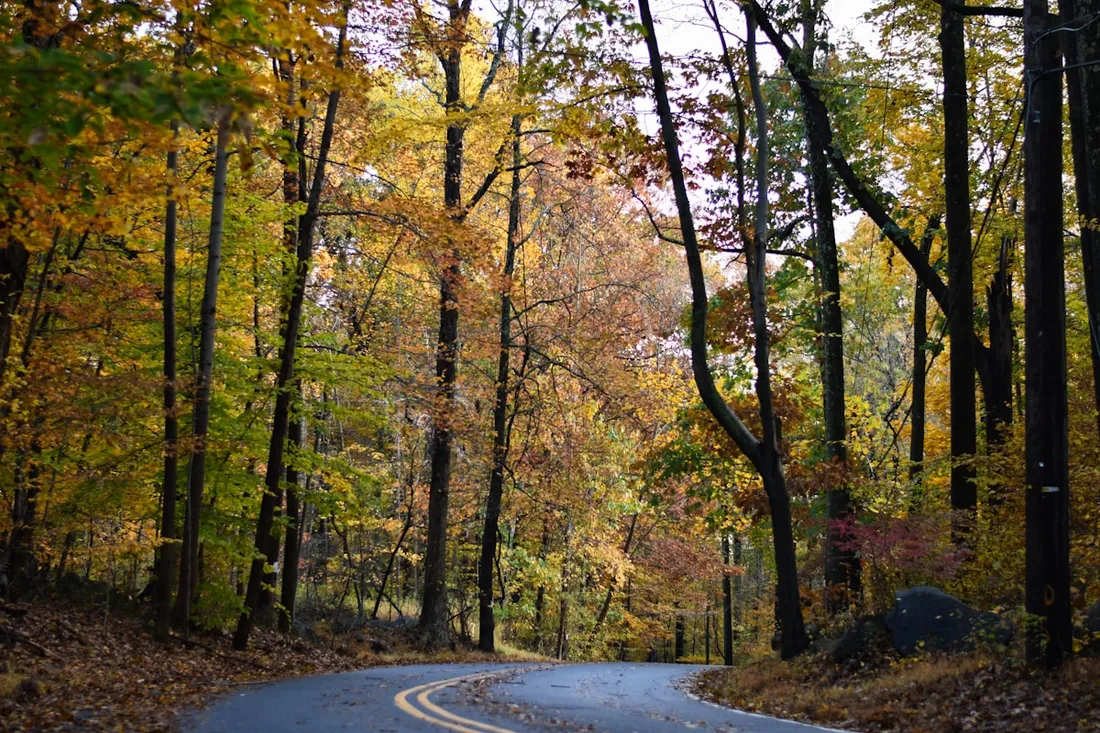
There’s a narrow window each year — two, maybe three weeks — when certain roads in North America become genuinely, absurdly beautiful. The kind of beautiful that makes you pull over every half mile. The kind that turns a four-hour drive into an eight-hour drive and nobody in the car complains.
Fall foliage road trips are worth planning around. The good ones combine peak color, small-town stops, and driving routes that feel like they were designed by someone who understood what a windshield is actually for.
Here are the best ones.
The Kancamagus Highway, New Hampshire
The Kanc is the standard by which all foliage drives are measured, and it earns it. Thirty-four miles through the White Mountains from Lincoln to Conway, with no commercial development, no stoplights, and a canopy of sugar maples that turns the road into a tunnel of red and gold in early October.
Stop at: Sabbaday Falls (a 15-minute walk to a gorgeous cascade), the Rocky Gorge Scenic Area, and any of the unmarked pullouts where the Swift River runs alongside the road. Pack a lunch and eat it on the rocks by the water.
Peak color: Late September to mid-October. The higher elevations turn first.
The play: Drive the Kanc, then continue north on Route 16 to Pinkham Notch and the base of Mount Washington. The Presidential Range in fall color, seen from the valley floor, is one of the best views in the eastern United States.
Blue Ridge Parkway, Virginia/North Carolina
Four hundred and sixty-nine miles of ridgeline driving through the southern Appalachians. You could do the whole thing in two days, but you shouldn’t. Pick a section, drive it slowly, and stop at every overlook that catches your eye — there are over 200.
The best section: Milepost 292 to 469, from the Peaks of Otter in Virginia to Cherokee, North Carolina. This stretch includes Grandfather Mountain, the Linn Cove Viaduct (the most photographed bridge on the parkway), and the highest point on the road at Richland Balsam.
Stop at: Floyd, Virginia — a tiny town with a famous Friday night bluegrass jam at the Floyd Country Store. The music is real, the audience is local, and flat-footing on a creaky wooden floor surrounded by fall color feels like stepping into a movie that Hollywood would never make because it’s too sincere.
Peak color: October, with higher elevations peaking in early October and the valleys holding color into late October.
Route 100, Vermont
If a committee sat down and designed the perfect New England fall drive, they’d come up with Route 100. It runs north-south through the center of Vermont, past white-steepled churches, covered bridges, dairy farms, and the kind of small towns that put “Welcome” signs at both ends and mean it.
The stretch to drive: Wilmington north through Weston, Ludlow, and Killington to Waterbury. About 120 miles. Stop in Weston for the Vermont Country Store (a time capsule of penny candy and flannel everything) and in Stowe for cider donuts at the Cold Hollow Cider Mill.
Peak color: Late September through mid-October. Vermont Tourism publishes a weekly foliage report — check it and time your drive to the map.
Pair it with: A detour to Woodstock, consistently rated one of the prettiest small towns in America. The Billings Farm is a working dairy that’s been operating since 1871. The covered bridge in the center of town is almost offensively photogenic.
Algonquin Provincial Park, Ontario
Canada does fall foliage better than most Americans realize, and Algonquin is the crown jewel. Highway 60 cuts through the park for 56 kilometers, bordered by a continuous wall of sugar maples and red oaks that peak in colors so saturated they look edited.
Stop at: The Lookout Trail (a 1-kilometer hike to a cliff-edge view of the forest canopy — this is the shot you’ve seen in every Ontario tourism ad), Canoe Lake for a paddle through the color, and the park’s visitor center for the best interpretive exhibits of any provincial park.
Peak color: Late September to early October. Algonquin is further north and peaks earlier than most US foliage destinations, so plan accordingly.
The play: Rent a canoe and paddle into the interior. The combination of fall color reflected in still lake water, surrounded by complete silence, is worth every mosquito bite from the summer you didn’t come.
Million Dollar Highway, Colorado
Colorado 550 from Silverton to Ouray — 25 miles of high-altitude switchbacks through the San Juan Mountains with aspen groves that turn solid gold in late September. The road clings to cliff edges with no guardrails and drops of 500 feet. It’s thrilling in the way that makes your passenger very quiet.
Stop at: Red Mountain Pass for the most dramatic views and the abandoned mining structures that dot the hillsides. Ouray at the south end is a Victorian mining town wedged into a box canyon with hot springs you can soak in while looking at golden aspens on the canyon walls.
Peak color: Late September to early October. Aspens turn fast and fall faster — the window is tight.
Extend it: Continue south from Silverton to Durango on the highway, or better yet, take the Durango & Silverton Narrow Gauge Railroad — a steam train that runs through a canyon alongside the Animas River. In fall color season, this might be the single best train ride in North America.
Columbia River Gorge, Oregon/Washington
The Pacific Northwest doesn’t get the foliage credit it deserves. The Columbia River Gorge — the border between Oregon and Washington — lights up in October with big-leaf maples, vine maples, and cottonwoods set against basalt cliffs and waterfalls.
Drive the Historic Columbia River Highway on the Oregon side from Troutdale to Hood River. This was the first planned scenic highway in the country, built in 1913, and it still feels like a revelation. Multnomah Falls, Oneonta Gorge, and a dozen other waterfalls cascade off the cliff walls.
Stop at: Hood River for lunch — it’s a small town with an outsized food and drink scene. Pfriem Family Brewers makes some of the best beer in Oregon. Double Mountain for pizza and IPA.
Peak color: Mid to late October. The gorge holds color longer than you’d expect.
Timing and Tips
Check the reports. Every state and province publishes weekly foliage forecasts during peak season. These are based on actual scouting, not guesswork. Plan your trip around them.
Go midweek. Peak foliage weekends on popular routes mean bumper-to-bumper traffic. Tuesday through Thursday on the same roads? You’ll have them nearly to yourself.
Start early. The morning light through fall foliage — especially backlit by a low sun — is dramatically better than midday light. Dawn on the Blue Ridge Parkway is worth setting an alarm for.
Book accommodation early. Small towns along these routes have limited rooms, and they fill up months ahead during peak season. A cabin or country inn booked in August for an October trip is the kind of planning that pays for itself.
The color doesn’t wait. When it’s there, it’s all-consuming. When it’s gone, the branches are bare and the road is just a road again. That urgency is part of what makes it worth the drive.