Croatia's Dalmatian Coast: The Adriatic Without the Amalfi Price Tag
Split to Vis by ferry — same Venetian architecture, better seafood, half the price. An island-by-island guide to Dalmatia.
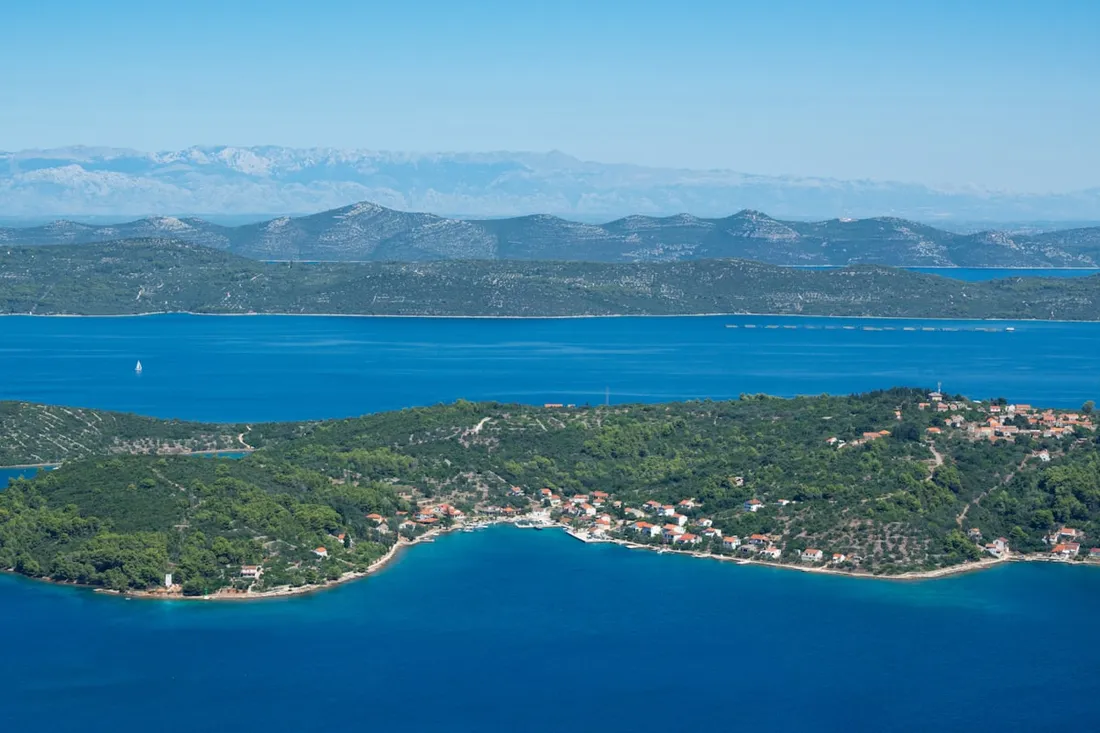
I booked Croatia because the Amalfi Coast wanted €400 a night in July and I wasn’t going to pay it. That’s not a philosophical stance — I just didn’t have the money. So I flew into Split, caught a catamaran to Hvar, ate grilled branzino on a stone terrace overlooking the same Adriatic Sea, and paid €85 for the room. The branzino was better than anything I’d had in Positano. The wine was Croatian, cold, and cost €3 a glass. I spent the entire trip angry at myself for every previous European summer I’d wasted paying Italian prices for worse food and more crowds.
That anger hasn’t gone away. It’s been two years and I’m still telling people about Dalmatia the way you tell people about a restaurant you’re scared will get too popular.
Why Amalfi Travelers Keep Landing in Croatia
Here’s the thing nobody mentions in the Amalfi discourse: the “less crowded alternative” villages — Praiano, Atrani, Cetara — aren’t alternatives anymore. They hit capacity by July. The buses along the SS163 are standing-room-only with a cliff drop on one side. You’re paying €25 for a mediocre Aperol Spritz while wedged between influencers filming the same sunset. I wrote about how to actually do Amalfi without the crowds, and the honest answer is: go in November, or go somewhere else.
Croatia’s Dalmatian coast is the somewhere else. It’s actually an upgrade you haven’t considered.
The architecture looks the same because it IS the same. Dalmatia was Venetian territory for centuries. Those honey-colored stone walls, the narrow staircases, the shuttered windows, the bell towers — Venice built them here too. Split’s old town is literally inside a Roman emperor’s palace. Hvar’s main square could be dropped into the Veneto and nobody would blink. You’re getting the same aesthetic DNA at a fraction of the cost, with fewer tour groups and fish that was swimming that morning.
How the Ferry System Works (And Why It’s the Entire Trip)
The ferry network is your itinerary. Once you understand it, the trip plans itself. Ignore it, and you’ll end up stranded on a dock watching your connection pull away — which I did on Brač, but I’ll get to that.
Two companies matter: Jadrolinija runs the big car ferries (slow, cheap, reliable), and Krilo runs the catamarans (fast, slightly pricier, books out in summer). There’s also TP Line for some routes, but Krilo and Jadrolinija cover 90% of what you need.
The route that works: Split → Hvar (Town) → Vis → back to Hvar → Brač → Split. Or swap Brač for Korčula if you want to push further south. The key is that most catamarans run a linear route down the coast, so you’re hopping in one direction and backtracking is easy.
Book catamarans 2-3 weeks ahead in June-August. I cannot stress this enough. Jadrolinija car ferries you can usually walk up for, but Krilo catamarans sell out. Book on their websites directly — the aggregator sites charge a markup for the same seats.
Typical fares (2026 prices):
- Split to Hvar Town (Krilo catamaran): ~120 HRK / €16
- Split to Vis (catamaran): ~130 HRK / €17
- Hvar to Korčula (catamaran): ~100 HRK / €13
- Split to Supetar, Brač (Jadrolinija car ferry): ~40 HRK / €5.50
The car ferries take you to the near side of each island — Supetar on Brač, Stari Grad on Hvar. The catamarans go to the town side — Hvar Town, Vis Town. This matters. If you’re going to Hvar Town (you are), take the catamaran. The car ferry drops you in Stari Grad, which is 20 minutes by bus on the other side of the island, and that bus doesn’t always line up with the ferry.
Here’s what nobody tells you: ferries run on a different schedule on Sundays. I learned this on Brač when I showed up at the Bol dock for a 4pm catamaran that didn’t exist on Sundays. Spent the night in Bol, which was actually fine. The sunset from Zlatni Rat beach with nobody on it was worth the screwup. But check the Sunday schedule. Every time.
If you’ve done Greek island hopping, this’ll feel familiar, but more compact. The distances are shorter, the crossings are calmer, and the boats are more reliable than anything in the Cyclades.
Split: Your Base, Not Your Destination
Split gets one night, maybe two. It’s a transit hub with a spectacular old town that you can see in an afternoon. Diocletian’s Palace is genuinely impressive — a 1,700-year-old Roman ruin that people still live and work inside of. You’ll walk through the Peristyle, hear someone busking in the basement halls where the acoustics are absurd, and smell grilled ćevapi drifting from the restaurants wedged into the palace walls.
Eat at Konoba Matejuška, a tiny fish restaurant on the waterfront west of the old town, right by the fishermen’s harbor. The brudet — a Dalmatian fish stew with polenta — is the color of rust and tastes like the sea concentrated into a bowl. Dense, tomato-based, with chunks of whatever was caught that morning. 95 kuna (~€12.50). Pair it with a half-liter of house pošip, a white grape you’ve never heard of that you’ll spend the rest of the trip ordering.
Don’t stay inside the palace walls — it’s loud at night and overpriced. Hostel Emanuel in Varoš, the old neighborhood just west of the center, is €14/night for a dorm, quiet after 10pm, and a 5-minute walk to everything. If you want a private room, apartments on the streets behind the Riva promenade run €50-70 in summer. Look for places listed by actual names (Apartment Marija, Studio Ante) rather than branded properties — they’re cheaper and the owners actually care if you’re comfortable.
Split’s real purpose is the 6am catamaran departure. Get up early, grab a burek — flaky phyllo stuffed with cheese or meat, 15 kuna (~€2) from any bakery — and eat it on the boat. That’s your Split morning routine.
What Do You Actually Want From an Island? Here’s How to Choose
Every island has a personality. Pick wrong, and you’ll spend your trip wishing you were somewhere else. Here’s the honest breakdown:
Hvar: The Social One
Hvar Town is beautiful and it knows it. The harbor is lined with yachts, the cocktail bars stay open until 3am, the Venetian fortress above town glows at sunset, and the crowd skews late-20s to mid-30s with money to spend. It’s the most “scene” island on the coast. If that sounds annoying, you might be right — but the architecture is stunning, the lavender fields in the island’s interior smell like someone spilled essential oils on the sun, and the restaurants are genuinely excellent.
Go to Hvar if: you want two days of socializing, good nightlife, beautiful people, and you don’t mind paying a 20% premium on everything.
Eat at Gariful on the harbor for a splurge — the octopus salad is char-grilled tentacles over arugula with capers and lemon, still warm, slightly smoky, absurdly tender. 130 kuna (€17). For cheap eats, Alviz does a solid peka — lamb or octopus slow-roasted under an iron bell with potatoes and herbs. You order it two hours ahead and they bring it to the table with the bell still on, steam escaping from the edges. 90 kuna (€12) per portion.
Stay at: Green Lizard Hostel (€18/night dorm, good rooftop, 5-minute walk from the square) or Villa Nora for a private double (€75-90/night, breakfast included, quiet street behind the theater).
Brač: The Low-Key One
Brač is where Croatians go on vacation, which tells you everything. Supetar on the north side is a small, quiet port town with good bakeries and not much else. Bol on the south side has Zlatni Rat, the famous horn-shaped beach that shifts with the current — it’s on every Croatia poster, and honestly, it lives up to the photos. The water is that specific shade of turquoise that looks Photoshopped but isn’t.
The vibe is families, windsurfers, and people who want to read a book on a beach without being bothered. The nightlife is a glass of wine at a konoba and bed by 11.
Go to Brač if: you want a quiet island with a world-class beach, affordable food, and zero pretension.
Eat at Konoba Kopačina in Donji Humac, a village in the island’s interior — lamb roasted under a peka bell, local olive oil so green it looks like liquid grass, and bread baked in a stone oven. The whole experience costs about 120 kuna (~€16) and you’ll eat outside under a grape arbor while the owner’s dog sleeps under your table. This isn’t a tourist restaurant. There are maybe eight tables.
Stay at: Guesthouse Marija in Bol (€45-60/night, private double, 10-minute walk to the beach, the owner will pick you up from the ferry if you ask nicely).
Vis: The One That’s Worth the Extra Ferry
Vis was a Yugoslav military base until 1989. Tourists weren’t allowed until 1995. That 50-year head start in isolation means it feels genuinely different from the other islands: less developed, fewer hotels, and more wild. The stone villages look like they haven’t changed in a century because they mostly haven’t.
Vis Town has a harbor lined with fishing boats and restaurants that serve whatever came in that morning. Komiža, on the other side of the island, is smaller, rougher, and the launching point for boat trips to the Blue Cave on Biševo (worth it if the sea is calm; if it’s choppy, you’ll just bob in a queue of boats for an hour).
The seafood on Vis is the best on the coast. I’ll say that without qualifying it. The grilled fish at Konoba Jastozera in Komiža — a restaurant literally built into a 17th-century lobster trap — is the kind of meal that restructures your priorities. I had a whole grilled scorpionfish, ugly as sin, served on a wooden board with Swiss chard, potatoes, and olive oil. The flesh was sweet and firm, almost meaty. 150 kuna (~€20) for the whole fish. The setting alone — stone walls, the sound of the harbor water slapping against the building’s foundations — would make an average meal memorable. This meal didn’t need the help.
Go to Vis if: you want the quietest, most “undiscovered” island that’s still accessible by daily catamaran. It won’t feel undiscovered forever.
Stay at: Apartments Rina in Vis Town (€55-70/night, simple but clean, the terrace overlooks the harbor) or Hostel Paradiso in Komiža (€16/night dorm, tiny but well-run).
Korčula: The Southern Swing
Korčula is worth the extra ferry time if you’re heading south anyway — maybe toward Dubrovnik, or you’ve already done the closer islands and want something new. The old town is a miniature Dubrovnik without the cruise ship crowds, built on a peninsula that juts into the sea. The streets are laid out in a herringbone pattern designed to block the wind, which is the kind of medieval urban planning detail that makes you feel something.
The wine here is different — Korčula is grk and pošip territory, white grapes that grow almost nowhere else. Konoba Mate in Pupnat does a lamb and peka combination that rivals Brač, and the house grk is served cold from an unmarked carafe. 70 kuna (~€9) for a half-liter. You won’t find this wine outside Croatia. Drink as much as you can while you’re here.
Go to Korčula if: you’re connecting to Dubrovnik, you’ve already done Hvar, or you want a quieter alternative with medieval atmosphere and local wine.
The Real Cost Breakdown: Dalmatia vs. Italy by Line Item
This is the part that made me angry. Here’s what a week actually costs, side by side, for a mid-range traveler (private room, eating out twice a day, doing activities):
| Category | Dalmatian Coast | Amalfi Coast |
|---|---|---|
| Accommodation (private double, 7 nights) | €420-560 (~€60-80/night) | €1,400-2,800 (~€200-400/night) |
| Meals (lunch + dinner, 7 days) | €175-245 (~€25-35/day) | €350-490 (~€50-70/day) |
| Inter-island ferries (4 crossings) | €50-65 | N/A (bus: €35-50) |
| Local transport (buses, water taxis) | €30-40 | €70-100 |
| Activities (Blue Cave, wine tasting, etc.) | €60-90 | €80-150 |
| Coffee + drinks (daily) | €21-35 (~€3-5/day) | €42-70 (~€6-10/day) |
| Weekly total | €756-1,035 | €1,977-3,660 |
Look at those numbers. You can do a full week of island hopping in Dalmatia — private rooms, restaurant meals, ferries, wine — for what three nights in a mid-range Amalfi hotel costs. And the Croatian seafood is better. I’ve had both. The fish in Dalmatia was caught that morning from boats you can see in the harbor. The fish in Amalfi was fine. The price was not.
If you’re on a hostel budget, Dalmatia drops below €50/day comfortably. That’s European city break money for a week of island hopping.
When to Go — And Why Everyone’s Peak Is Actually Off-Season
June and September. That’s the answer. Late June before the Italian and German school holidays start, or September after they end.
July and August work, but Hvar Town gets genuinely crowded and accommodation prices jump 30-40%. It’s still a fraction of Amalfi, but you’ll share Zlatni Rat with a lot more towels.
May and early October are the secret months. Water’s still warm enough to swim (20-23°C), ferries run on full schedule, restaurants are open, but the islands feel half-empty. I was on Vis in late September and had entire beaches to myself. The konoba owners were relaxed and chatty because they weren’t slammed. One guy in Komiža sat down at our table and poured us rakija from a bottle with no label. “From my uncle’s orchard,” he said. It tasted like plums and fire.
Winter: don’t. Most island restaurants and hostels close November through March. Ferries run reduced schedules. Split is fine year-round, but the islands go dormant. This isn’t a train trip through continental Europe where cities work in every season — the Dalmatian coast is a summer destination and doesn’t pretend otherwise.
The One Thing Croatia Does Better Than Anywhere in the Mediterranean
The water.
I know that sounds like a guidebook line, but I mean it literally. The Adriatic on the Croatian side is clearer than anywhere I’ve swum in Greece, Italy, or southern France. The beaches are mostly pebble and rock, which means no sand churning up the water. You wade in and you can see the bottom at 15 feet. The rocks are covered in sea urchins — wear water shoes, seriously, I stepped on one in Hvar and limped for two days — but the clarity is unlike anything else.
Every island has a spot where you scramble over rocks, find a flat ledge, and slip into water so transparent it feels like you’re floating in air. On Vis, I found one behind the old British fortress on the north side of Vis Town. No path, no sign, no other people. Just warm stone, cold water, and the sound of nothing.
Yes, navigating a new country’s ferry system feels intimidating. Yes, you’ll mispronounce everything — it’s “hvahr,” not “h-var,” and you’ll still say it wrong. The woman at the ticket counter won’t care. The guy at the konoba will pour your wine whether or not you can pronounce pošip correctly. (It’s “poh-ship.” You’re welcome.)
You don’t need to speak Croatian. English is widely spoken on the coast, especially by anyone under 40. You don’t need a car — ferries and local buses connect everything that matters. You don’t need a plan beyond “which island am I sleeping on tonight.” Book your first night in Split, book your first ferry to Hvar, and let the rest unfold. The distances are short, the boats are frequent, and every island has a konoba with cold wine and grilled fish waiting for you at the end of the dock.
I’ve spent four summers on Mediterranean coasts. Dalmatia is the one I keep coming back to — and the one I keep hoping people won’t read about. Too late for that, I guess. Go before everyone else figures it out.