Cherry Blossoms Without the Selfie Wall: The Best Spots Nobody Tells You About
Japan isn't the only option. Yoshino, Jinhae, Macon, and Keukenhof offer the same spectacle at a fraction of the crowd, and some cost less to reach.
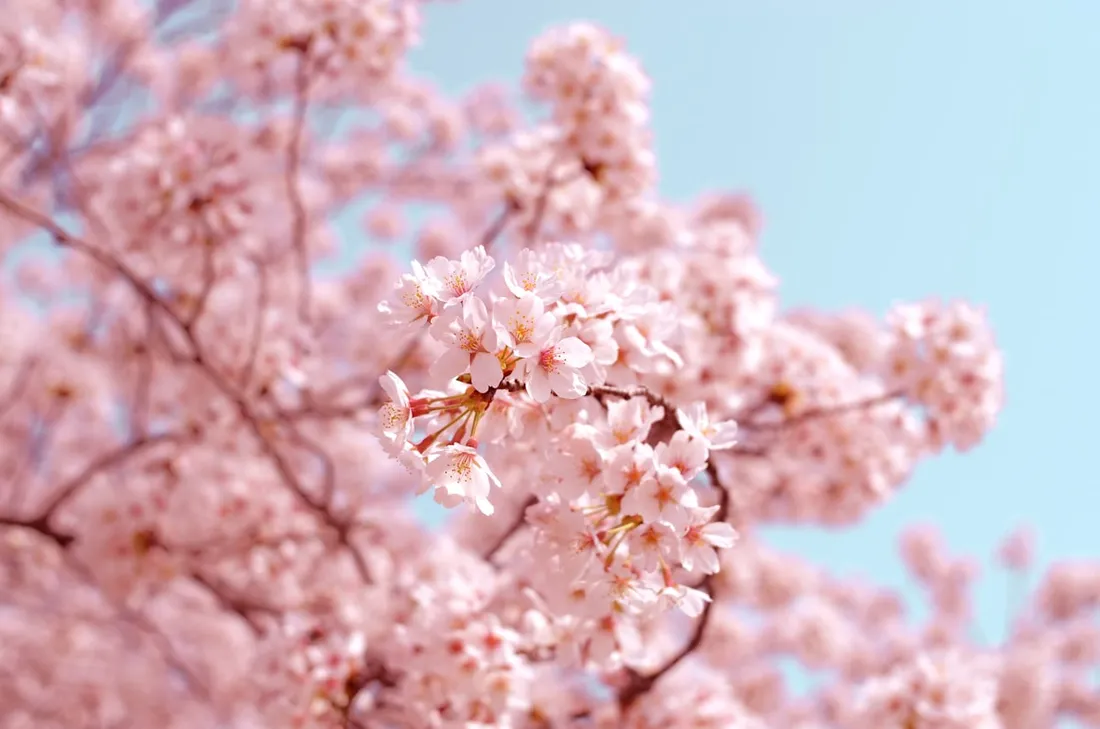
I Spent 40 Minutes at the DC Tidal Basin Looking for a Clear Shot
I went to the Tidal Basin on what I considered a strategic Tuesday at 8am, outside the main tourist window. I’d done the research. I knew the peak bloom forecast. I wore walking shoes and brought a real camera because this was going to be the shot, soft pink against still water, the Jefferson Memorial going hazy in the background.
I spent 40 minutes finding a clear sight line to the water and left with a memory card full of excellent photos of other people’s camera equipment. Tripods, selfie sticks, a drone that may or may not have been legal, and one guy with a ring light the size of a dinner plate doing what I can only assume was a proposal rehearsal. The blossoms were beautiful. I saw them mostly through gaps between strangers’ elbows.
That trip is why I started looking for cherry blossom destinations that deliver the same botanical spectacle without requiring you to treat a public park like a Black Friday doorbuster. Turns out, they exist, and several of them cost less to reach than a round trip to Tokyo.
Why the Famous Spots Are Only Getting Worse (and What’s Actually Changed)
The DC Tidal Basin draws 1.5 million visitors during a two-week window. Kyoto’s Maruyama Park packs in thousands daily during peak week, and the Philosopher’s Path (a sidewalk) becomes a single-file shuffleboard game. These places genuinely are beautiful. I’m not pretending they aren’t. But the experience of being there has fundamentally changed in the last five years.
Three things happened at once. Instagram made cherry blossom content a seasonal algorithm goldmine, which means every travel account on earth now needs “the shot” during the same 10-day window. Post-pandemic revenge travel crammed three years of delayed trips into one season and the crowds never went back down. And budget airlines (especially in Asia) made peak-season flights affordable enough that the old barrier of “too expensive to fly there for a week” disappeared.
Here’s what nobody tells you: the trees don’t care about the crowd. Cherry blossoms bloom in thousands of places. The species doesn’t require a UNESCO site or a national monument to perform. Some of the best blossom viewing in the world happens in places that don’t make the listicles, places where you can actually stand still, breathe, and hear the petals hitting the ground instead of someone’s phone alarm.
Yoshino, Japan: The Mountain That Makes Kyoto Look Crowded
Yoshino-yama has been Japan’s definitive cherry blossom destination for over a thousand years, long before Kyoto’s tourist machine existed. The mountain is covered in roughly 30,000 cherry trees spread across four elevation zones: Shimosenbon (lower), Nakasenbon (middle), Kamisenbon (upper), and Okusenbon (inner). Because the bloom climbs the mountain as temperatures warm, you get nearly a full month of blossoms instead of one frantic week.
For spring 2026, the forecast puts Shimosenbon blooming around late March into early April, Nakasenbon peaking in early to mid-April, and the upper reaches carrying on through late April. That’s a massive advantage over Kyoto, where you’ve got maybe a five-day window and everyone on earth knows exactly which five days those are.
The experience is different from anything you’ll get in a city park. You’re hiking (gently, but hiking) through groves so dense with Yoshino cherry that the canopy turns the light pink. The air smells sweet in a way that’s hard to describe until you’ve stood in a grove of several thousand flowering trees at once. It’s not perfume-sweet. It’s faint and grassy, almost like fresh-cut hay mixed with something floral. The petals drift across the trail and accumulate in drifts against stone steps.
Getting there: Take the Kintetsu line from Osaka’s Abenobashi Station to Yoshino Station, about 90 minutes, roughly ¥1,000 (~$6.50) one way. From Kyoto, transfer at Kashiharajingu-mae. If you’re already planning a broader Japan trip beyond the major cities, the Kintetsu Rail Pass covers this route and it’s worth the math. (I wrote a whole post about getting out of Tokyo and into the parts of Japan that actually change you, and Yoshino fits that philosophy exactly.)
Where to stay: This is where Yoshino gets interesting. The mountain has traditional ryokan and minshuku scattered along the trail, many of them centuries old. Expect ¥8,000-15,000 (~$52-98) per person including dinner and breakfast, kaiseki meals with mountain vegetables, tofu skin, and local river fish. Chikurin-in is a temple lodging with a garden attributed to Sen no Rikyu and rooms that open directly onto the blossom groves. Book this one two months out minimum during blossom season.
What nobody tells you: Yoshino is cash-heavy. ATMs are scarce on the mountain, and some of the smaller ryokan and food stalls don’t take cards. Bring at least ¥15,000-20,000 in cash for an overnight. Also, the lower trails get crowded on weekends, so go mid-week if you can, and hike past Nakasenbon to the upper groves where the day-trippers thin out dramatically.
Eat this: Kaki no ha zushi, sushi wrapped in persimmon leaves, a Yoshino specialty. You’ll find it at stalls along the trail for ¥600-800 (~$4-5). The leaf imparts a faintly tannic, woody flavor to the rice that’s unlike anything you’ll get in a sushi restaurant. It looks like a small green package and tastes like the mountain.
Jinhae, South Korea: The Festival Koreans Actually Attend
While Western travel media obsesses over Japan’s sakura, South Korea’s Jinhae Gunhangje Festival is one of the largest cherry blossom festivals in the world, and most English-language travel content barely mentions it. This coastal city near Busan has over 350,000 cherry trees. That’s not a typo. Three hundred and fifty thousand.
The 2026 festival runs March 29 through April 6, with peak bloom expected around April 1-7. The signature spots are Yeojwacheon Stream, where blossoms arch over the water and the reflection doubles the effect, and Gyeonghwa Station, a decommissioned railway line where you walk along the tracks under a tunnel of petals. Both are genuinely stunning. Both will also have crowds during peak hours, but nothing close to the Tidal Basin’s density, and the sheer spread of 350,000 trees means you can always find quieter groves by walking 10 minutes in any direction.
The smell at Yeojwacheon is what I remember most from Korean blossom festivals. Cherry blossoms on their own are subtle, but mix them with street food smoke (tteokbokki and hotteok frying 20 meters away) and you get this strange sweet-savory combination that immediately puts you in a specific time and place. The sound of the stream underneath, the crunch of petals on pavement, someone’s grandmother sitting on a bench eating bungeoppang completely unbothered by the spectacle around her. That’s the scene.
Budget play: Don’t stay in Jinhae itself. Accommodation is limited and overpriced during the festival. Base yourself in Busan, where a hostel dorm runs ₩15,000-25,000 ($10-17) per night and the food scene is worth the trip on its own. Take the intercity bus from Busan’s Sasang Bus Terminal to Jinhae, about an hour, ₩5,000 ($3.50). Day trip it. You’ll have the full festival experience and come back to Busan’s Haeundae neighborhood for raw fish at the Jagalchi Market.
Eat this: Hotteok from any festival vendor, a crispy fried pancake filled with brown sugar, cinnamon, and chopped nuts. The outside shatters, the inside oozes. ₩2,000 (~$1.40). Eat it while it’s too hot and burn the roof of your mouth. This is the correct experience.
What nobody tells you: The festival includes a military port open day where you can tour actual Korean naval vessels. It’s bizarre and wonderful and completely free. Also, Gyeonghwa Station is most photogenic at dawn before the crowds, and the light through the blossom tunnel at 6:30am is worth the early alarm.
Macon, Georgia: America’s Cherry Blossom Capital With No Lines
Look, I know. Georgia isn’t where your brain goes when someone says “cherry blossoms.” But Macon has over 350,000 Yoshino cherry trees (the same species as DC’s famous ones) compared to DC’s roughly 3,700. That’s not a close contest. The entire city turns pink, and the International Cherry Blossom Festival (March 20-29, 2026) treats it like the civic celebration it should be: free parking, live music, a 10-day party.
The experience is fundamentally different from DC or any Asian blossom destination. Instead of concentrating the trees in one park behind a wall of tourists, Macon’s blossoms are everywhere, lining residential streets, filling city parks, arching over downtown sidewalks. You drive through tunnels of pink on your way to breakfast. The best viewing doesn’t require a ticket or a strategy. You just walk outside.
This is a strong pick for anyone who wants the blossom experience as part of a weekend trip rather than an international flight. Atlanta’s Hartsfield-Jackson is 80 miles north. Drive down, spend three days, eat well, drive back. Total trip cost including gas and a hotel: probably under $500.
Where to stay: Chain hotels line I-75 north of town, and a Holiday Inn Express or Wingate runs $80-120/night during the festival, which is still absurdly affordable compared to DC hotel rates during bloom week. For something with more character, The Hummingbird is a boutique hotel in a renovated Victorian house in the Vineville neighborhood, right in the middle of blossom-lined streets.
Eat this: Macon’s food scene is underrated Deep South. Get fried green tomatoes and pimento cheese at The Rookery, a burger joint downtown where the patties are hand-formed and the sweet tea comes in Mason jars because of course it does. H&H Soul Food was good enough for the Allman Brothers, and the fried chicken and collard greens have been the same recipe for decades. $12-18 for a full meal at either spot.
What nobody tells you: The blossoms peak earlier than DC’s because Georgia is warmer. Mid-to-late March is your window. By the time DC hits peak bloom in early April, Macon’s already done. Plan accordingly. Also: the Cherry Blossom Trail is a self-guided driving route through the most densely planted neighborhoods. Pick up a map at the visitor center or download it from the festival site. Roll the windows down. That’s the whole plan.
How to Book When the Peak Window Is One Week
Cherry blossom travel has a planning problem. You can’t book six months out with certainty because bloom timing depends on weather that hasn’t happened yet. You can’t wait for the forecast because accommodation sells out weeks before the forecast firms up. It’s a timing trap, and most people either book too early and miss peak, or wait too long and overpay for whatever’s left.
Here’s the strategy I’ve used for seasonal travel across multiple countries in Asia and across Europe: book refundable, book wide, then narrow.
Step 1: Book refundable accommodation for two possible weeks. The forecast models for Japan and Korea give a general window by early February. For Yoshino in 2026, that means booking refundable stays for both the first and second weeks of April. Use Booking.com’s free cancellation filter religiously. You’ll cancel one of the two bookings once the forecast narrows in early March, no penalty.
Step 2: Use regional bloom progression to your advantage. This is Yoshino’s superpower: because the bloom climbs the mountain, you don’t need to nail a single week. If you arrive a few days early for Nakasenbon, Shimosenbon is already in full bloom below you. If you arrive a few days late, hike higher. The mountain gives you a three-week buffer that no city park can match.
Step 3: Book flights separately from accommodation. Flights to Osaka (the gateway for Yoshino) or Busan (for Jinhae) don’t surge as dramatically as Tokyo or Seoul flights during blossom season because most tourists default to the major cities. An Osaka round trip from the US typically runs $650-900 in early April. Busan can be cheaper, $550-800 from many US gateways.
Step 4: Have a pivot destination. If the forecast shifts dramatically, don’t force it. Macon blooms earlier (mid-to-late March). Yoshino’s upper groves bloom later (mid-to-late April). South Korea’s bloom often trails Japan’s by a few days. Stack these in your mind as a cascade, not a single bet.
| Destination | Peak Bloom 2026 (Est.) | Budget/Day | Flight from US |
|---|---|---|---|
| Yoshino, Japan | Late Mar - Late Apr | $70-120 | $650-900 (Osaka) |
| Jinhae, South Korea | Apr 1-7 | $50-80 | $550-800 (Busan) |
| Macon, Georgia | Mar 20-29 | $80-130 | Domestic |
| Keukenhof, Netherlands | Mid-Apr (tulips) | $90-140 | $450-700 (Amsterdam) |
What Happens If You Miss Peak Bloom?
It happens. The forecast said April 3. You booked April 5. A cold snap pushed the bloom back, then a warm front accelerated it, and by the time you landed, petals were already carpeting the ground like pink snow. I’ve missed peak bloom once, and honestly? The aftermath is beautiful too, just different. Petals in gutters, petals on the surface of ponds, petals stuck to your shoes. The Japanese call it hanafubuki, literally “flower blizzard,” and there’s a reason it has its own word.
But if you want a contingency plan, here’s mine: pivot to Keukenhof.
Keukenhof, outside Amsterdam, opens March 19 through May 10, 2026. It’s technically a tulip garden, not a cherry blossom destination, but they’ve planted cherry trees along the main paths and the effect in mid-April, when the tulips peak alongside late-blooming cherry varieties, is a color overload that makes up for any missed sakura. It’s also one of the easiest pivots in travel. Amsterdam has cheap flights from everywhere, the train to Lisse takes 35 minutes, and a Keukenhof ticket is about €20 (~$22). If you’re already thinking about a European rail trip, bolt this on.
The other contingency is simply to shift your expectations. A cherry blossom trip where you catch 70% bloom or early petal fall is still a cherry blossom trip. The trees are still there. The light is still soft. The food stalls are still open. I’ve watched travelers spend so much energy optimizing for “the perfect week” that they forget to enjoy the week they actually got. The $3 khao soi I had on a random cart in Chiang Mai wasn’t planned either. I just happened to walk past at the right moment. The best travel memories work like that.
Go to Yoshino. Go to Jinhae. Go to Macon if you’ve only got a weekend and a car. Book refundable, check the forecast in early March, and accept that nature doesn’t run on your calendar. The blossoms will be there. The selfie wall won’t.