Albania's Riviera Before the Crowds: A Real Budget Guide to the Mediterranean's Last Affordable Coast
Ksamil is what Santorini looked like before the crowds arrived. Albania's coast for $35–60/day: ferry from Corfu, real logistics, no fluff.
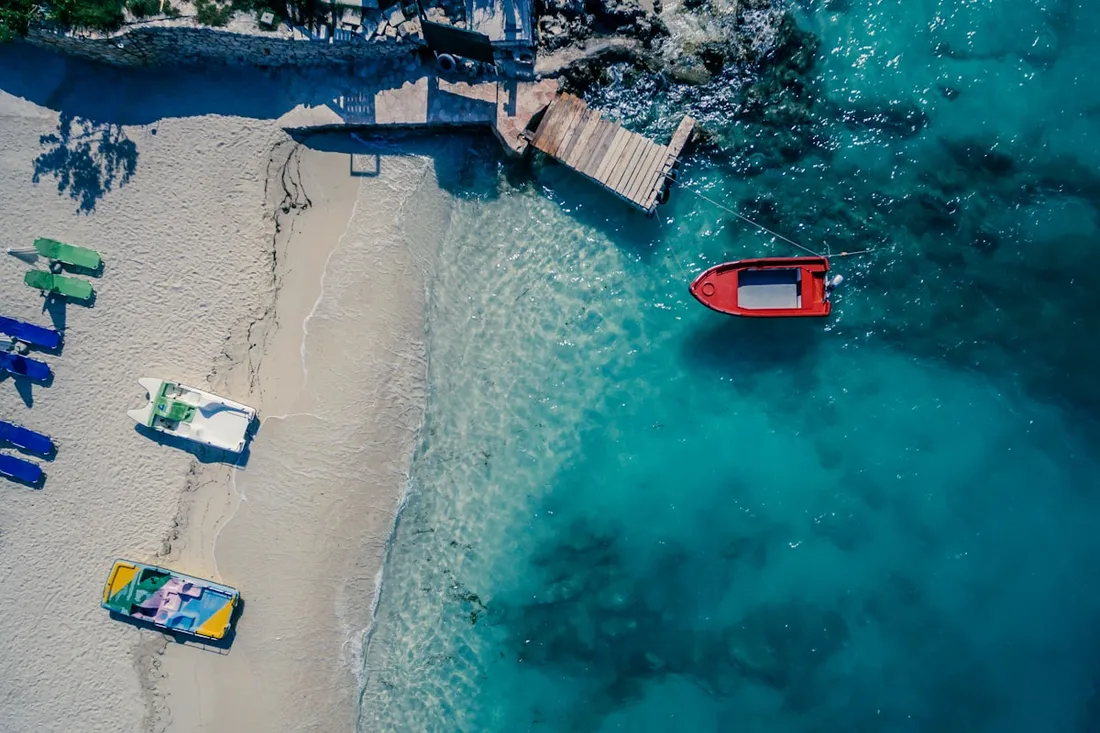
A friend dared me to go to Albania. Not in the fun way — more like “I bet you won’t.” He’d been twice and kept saying the same thing: you’ll be surprised. I booked a flight to Corfu with a ferry connection to Saranda mostly to prove him wrong, and I spent the entire Ryanair descent over the Ionian Sea rehearsing my skepticism. Then I got to Ksamil, looked at the water — turquoise, absurdly clear, the kind of color you assume is a filter — and started mentally rearranging my next two years of travel plans on the spot.
That was the moment I realized the “new Croatia” framing everybody uses for Albania isn’t just lazy. It’s actively misleading. Croatia is polished, expensive, and increasingly suffocating under its own popularity. Albania is none of those things. And that’s exactly the point.
What Albania Actually Looks Like (Versus What You’re Picturing)
Here’s what nobody warns you about: Albania’s coast doesn’t look like a finished product. The roads are rough in places. Construction sites sit half-abandoned next to Byzantine churches. You’ll see a stunning beach backed by a concrete skeleton of a hotel that someone started building in 2019 and apparently forgot about. A goat will be standing in the lobby.
This is what makes people nervous, and it’s also what makes the place extraordinary. The chaos is the texture. You’re not walking through a curated tourist corridor — you’re walking through a country that’s still figuring itself out in real time, and there’s an honesty to that you won’t find in Dubrovnik’s €8 espresso bars.
The Riviera stretches roughly from Saranda in the south up through Himara and beyond, with Gjirokastra sitting inland like a stone fortress someone forgot to tell the 21st century about. The water along this coast rivals anything I’ve seen in Greece — and I’ve spent a lot of time in Greece (my Greek island-hopping guide covers the Cyclades route in detail). But the comparison breaks down fast. Greece has infrastructure, English menus, and reliable ferry schedules. Albania has a guy named Arben who drives a minibus when he feels like it.
You’ll adjust. And once you do, you’ll realize the absence of polish is what keeps this coast affordable, uncrowded, and genuinely interesting.
Ksamil, Himara, or Gjirokastra: Which Town Is Worth Your Week?
These three operate at completely different frequencies. You could hit all three in a week, but you’d be rushing, and rushing in Albania defeats the purpose. Pick one as your base, add a second if you’ve got the time, and don’t feel guilty about skipping the third.
Ksamil
Let’s get the awkward part out of the way: Ksamil is getting expensive. Not Positano expensive — not even close — but the beach club culture has arrived. Sunbed rentals at the main beaches now run 1,500–3,500 ALL (€15–€35) for a pair with an umbrella. The prime Instagram spots charge up to €70. This is not the backpacker paradise the 2019 blog posts describe.
But here’s what still works. The water is unreal — I don’t use that word casually. It’s the kind of clear where you can see your feet in chest-deep water and the color shifts from pale green to deep blue within 20 meters. The three small islands just offshore are swimmable (bring water shoes, the rocks are sharp), and the light in the late afternoon turns the whole bay into something painters would’ve fought over.
Skip the main beach. Walk 15 minutes south along the coast toward the smaller coves and the prices drop by half. Eat at Liri Restaurant in the village proper — grilled branzino, a tomato salad with the best feta I’ve had outside of Crete, and a half-liter of local white wine for about 2,500 ALL (~$25 for two people). The fish smell hits you from the street before you see the grill.
Ksamil works best as a 2–3 day beach stop, not a week. There’s not enough town to sustain a longer stay unless you’re content doing absolutely nothing, which — fair enough, sometimes that’s the move.
Himara
This is where I’d plant myself for a week, and I did. Himara doesn’t try as hard as Ksamil, which is exactly why it’s better. The town has a split personality — a modern beachfront strip along the water and an old town climbing up the hill behind it. The old town is the play. Stone houses, narrow paths, cats everywhere, and views of the Ionian that make you stop mid-step.
The beach scene is mellower. Fewer sunbed hustlers, more local families. You can actually lay a towel on the sand without someone trying to sell you a parasol package. Livadhi Beach, a 10-minute walk south from the center, has that perfect ratio of beauty to effort — gorgeous enough to earn the walk, uncrowded enough to actually relax.
Stay at Himara Hostel if you’re doing dorms — it’s in the center of town, has a garden with hammocks and a free breakfast that’s better than it has any right to be. Dorms run around €10–12/night. For a private room, look at Margarita Guesthouse — breakfast included, sea views from some rooms, and the owner’s hospitality is the kind where she’ll remember your name and ask about your day. Expect €25–35/night for a double.
Food in Himara costs what food should cost. Byrek (flaky phyllo stuffed with cheese or spinach) from a bakery for 100–150 ALL ($1). Tavë kosi — lamb baked in yogurt until the top goes golden and the meat falls apart — for 600–800 ALL ($6–8) at any of the tavernas on the old town steps. The yogurt crust cracks when you push your fork through it, and the lamb underneath is so tender it’s almost confusing.
Gjirokastra
Gjirokastra isn’t on the coast. It’s an hour inland from Saranda by bus (300 ALL, about €3), and it’s a completely different Albania — Ottoman stone houses stacked up a hillside, slate roofs that clatter in the wind, and a castle so massive it has a Cold War–era military aircraft parked inside it. Yes, really.
The UNESCO-listed old town is what people mean when they say “frozen in time,” except Gjirokastra doesn’t feel frozen — it feels like it just never bothered to change. The bazaar has been there since the 17th century. The cobblestones are so polished by centuries of foot traffic they’re genuinely slippery when wet. I watched a man navigate them in dress shoes with the confidence of someone who’s been doing it for sixty years, which he probably has.
The castle entrance is 400 ALL (~$4). Budget two hours for it — the views alone are worth the climb, and the ethnographic museum inside is small but dense. The hike to Ali Pasha Bridge takes about 45 minutes each way from town and leads you through shepherd paths with wildflowers and no other tourists. Bring water. There’s no stall, no vendor, no nothing — just a stone bridge and silence.
Guesthouses here are absurdly cheap. A double room with breakfast in a converted Ottoman house — stone walls, wooden ceilings, the kind of place that would cost €150 in Dubrovnik — runs €20–30. Gjirokastra is a 1–2 night stop, but those nights will be some of the most atmospheric of your entire trip.
The Corfu Ferry: Getting There for Under €20
The most common approach to Albania’s southern coast is the ferry from Corfu to Saranda, and it’s one of the best entry points in Mediterranean travel. The crossing takes 30–60 minutes depending on the operator and the sea. On a clear day, you can see Albania from Corfu’s eastern shore, which does something to your sense of how close “another country” can be.
Book with Finikas Lines or Ionian Seaways — both run the route regularly. Foot passenger tickets start at €10–15 one way if you book in advance through Ferryhopper (which I’ve recommended before and will keep recommending — it’s the best ferry booking app in Europe, full stop). Peak summer prices push up to €20–25, but shoulder season? You can cross an international border on the Mediterranean for the price of two drinks in Corfu Town.
Here’s the logistics nobody spells out: buy your ticket online at least a few days ahead in July and August. Shoulder season (May, June, September, October) you can often buy at the port, but why risk it? The ferries aren’t huge, and a sold-out sailing means waiting for the next one, which might not be until tomorrow.
Bring your passport. Obvious, but I’ve seen people at the Corfu port suddenly realize they left it at the Airbnb. The Albanian border check happens on arrival in Saranda — it’s quick, usually 5–10 minutes, but see the section below about the one thing that trips people up.
If you’re coming from mainland Greece, you can also bus from Athens to Ioannina and cross at the Kakavija land border, but that’s a longer day and a less interesting arrival. The ferry is theater — watching Albania materialize across the strait while standing on a boat deck is the kind of entrance a coastline this good deserves.
Real Daily Numbers: What $35–60 Actually Gets You
Albania’s coast is 30–50% cheaper than Greece or Croatia for a comparable experience, and that gap is real. But “cheap” is relative, and the coast has gotten more expensive in the last two years — prices have climbed 12–20% since 2024 in the main tourist areas. You’re not getting 2018 prices anymore. You’re getting 2026 prices, and they’re still excellent.
Here’s what a budget day actually looks like in Himara or Gjirokastra:
| Category | Daily Cost |
|---|---|
| Hostel dorm or budget guesthouse | €10–15 |
| Breakfast (included at most guesthouses, or bakery byrek) | €0–2 |
| Lunch (taverna meal or street food) | €4–6 |
| Dinner (sit-down with a beer or wine) | €7–12 |
| Local transport (bus or shared minibus) | €1–3 |
| Coffee and snacks | €2–3 |
| Daily total | €25–40 ($27–43) |
In Ksamil and Saranda, add €5–10/day for beach access and slightly higher restaurant prices. A comfortable mid-range day — private room, two restaurant meals, a beach day — runs €45–60 ($48–65).
For context: that mid-range Albanian day costs less than a budget day in Split. Less than a hostel-and-street-food day on the Amalfi Coast. And the water is just as blue.
A week on the Albanian Riviera, including the Corfu ferry, local transport between towns, and eating well every day, runs about €250–400 ($270–430) at the budget level. That’s for everything except your flight to Corfu.
One thing to know: Albania runs on cash. ATMs exist in Saranda, Himara, and Gjirokastra, but card acceptance outside of Saranda’s tourist strip is spotty at best. Pull out lek (ALL) at an ATM on arrival and keep cash on you. The byrek lady doesn’t take Visa.
The One Border Quirk That Catches First-Timers
Albania lets most nationalities in visa-free for up to 90 days. Americans, Canadians, EU citizens, Australians, Brits — you’re all fine. No visa, no pre-registration, no drama.
But here’s what catches people: your passport needs at least three months of validity beyond your planned exit date. Not beyond your entry date — beyond when you’re leaving. I watched a couple at the Saranda port get turned around because their passports expired in six weeks. They’d checked the “do I need a visa” box but not the validity window. The ferry back to Corfu doesn’t refund your ticket.
Check your passport expiration date right now. If it’s within six months of your travel dates, renew it before you book anything else. This isn’t Albania-specific — it’s standard across most of Europe — but the ferry crossing makes it feel more dramatic when you’re standing at the immigration window watching your trip dissolve.
The other thing: technically, you’re supposed to carry proof of accommodation and evidence of €50/day in financial means. In practice, I’ve never seen anyone asked for this at the Saranda port or the Kakavija land crossing. But “I’ve never seen it” isn’t “it won’t happen.” Have a booking confirmation on your phone and a bank statement accessible, just in case. It takes thirty seconds of preparation and eliminates the worst-case scenario.
One more: if you’re entering from Greece, you’re leaving the Schengen Area. Your Schengen 90-day clock pauses while you’re in Albania. This matters if you’re doing a longer European trip and need to manage your Schengen days. Albania doesn’t count against them. Some people use a week in Albania specifically for this reason, which is a pretty great reason to visit a place that deserves visiting anyway.
Is 2026 Really the Last Low-Crowd Window — or Just Travel Writing?
Look, every travel writer (myself included, sometimes) has an incentive to frame things as urgent. “Go now before it changes” is the most reliable hook in the business. It creates FOMO, and FOMO creates clicks. So let me be honest about what’s actually happening.
Albania’s tourist numbers have been climbing sharply. The infrastructure is improving — roads that were dirt three years ago are paved now, new hotels are going up along the coast, and Tirana’s airport is expanding. The cruise ships haven’t arrived in force yet, but Saranda’s port is being discussed for cruise-friendly upgrades. When — not if — that happens, the dynamic changes fast.
Is 2026 a great time to go? Yes. Genuinely. The prices are still low by Mediterranean standards, the beaches aren’t packed, and you can still have the experience of walking into a taverna where nobody speaks English and the menu is a handwritten piece of paper in Albanian. That experience has a shelf life.
Is it the “last chance”? No. Albania isn’t going to become Santorini overnight. The infrastructure gap is too wide, the country’s tourism strategy is still developing, and the interior (Gjirokastra, Berat, the Accursed Mountains) will stay relatively untouched for years. Even on the coast, Himara and the smaller villages north of it won’t hit Instagram-critical-mass the way Ksamil already has.
What I’d actually say is this: 2026 is the last year where Ksamil specifically feels like a discovery rather than a destination. The beach clubs are multiplying, the prices are climbing, and the crowd that used to go to Mykonos is showing up. In three years, Ksamil will be a different place. Himara has more runway. Gjirokastra has a decade.
So no, don’t panic-book a flight because some headline told you the clock is ticking. But don’t wait three years either. The coast is excellent right now, and “right now” is a gift you don’t get to reopen later.
Planning the Route: The Order That Makes Sense
There are two logical approaches, and one of them is better.
Option A (Recommended): Corfu → Saranda → Ksamil → Himara → Gjirokastra → Out
Fly into Corfu. Spend a night there if you want (Corfu Town is beautiful and the old fortress is worth a morning), or catch the afternoon ferry straight to Saranda. Use Saranda as a transit point — sleep one night, withdraw cash, get oriented — then bus or taxi to Ksamil (20 minutes, about 100 ALL / €1 by local bus). Do Ksamil for 2 days. Head north to Himara (bus from Saranda, roughly 2 hours, 400 ALL / ~€4). Spend 3–4 days in Himara. Day-trip or overnight to Gjirokastra from Saranda on the way back, or from Himara if the bus connections work (they sometimes don’t — check locally). Fly out of Tirana or backtrack to Corfu.
This route works because it front-loads the beach days when your energy is high and saves Gjirokastra’s slower, more atmospheric pace for when you’ve settled into the rhythm.
Option B: Tirana → Gjirokastra → Saranda → Ksamil → Himara → Corfu
Fly into Tirana, bus to Gjirokastra (4 hours, 800–1,000 ALL / €8–10), then work south to the coast and ferry out from Saranda to Corfu. This works if you’re already in the Balkans or want to avoid backtracking.
Either way: don’t try to do it in less than six days. Seven to ten is ideal. Albania rewards slow travel more than almost anywhere I’ve been — the whole coast operates at a pace that punishes rushing and rewards the person who sits at the same taverna two nights in a row.
A few practical notes for the route:
Transport between towns runs on a loose schedule. Buses and furgon (shared minivans) connect the main towns, but they don’t always have fixed departure times. The furgon leaves when it’s full. Show up at the bus station in the morning, ask around, and be prepared to wait. Or use Rome2Rio to plan the optimistic version of the route, then add a buffer. Download offline maps — Google Maps works but cell service gets patchy between towns along the coast road.
The coast road itself is one of the most scenic drives in Europe. If you rent a car (possible in Saranda, around €25–35/day), the drive from Saranda to Himara through the Llogara Pass — steep switchbacks, dramatic elevation changes, and a view at the top where the Riviera unfolds below you like someone unrolled a postcard — is worth the white knuckles. I don’t usually recommend renting cars, but this road made me reconsider.
Pack light. The cobblestones in Gjirokastra will destroy rolling luggage. The buses don’t have much storage. And you’ll be moving between towns often enough that a heavy bag becomes a genuine annoyance. I’ve written an entire post about carry-on-only packing and I’ll say it again here: one bag. Read the post.
The Albanian Riviera doesn’t need a sales pitch. It needs accurate information, realistic prices, and someone willing to say that the roads are rough, the furgon system is confusing, and the beach clubs in Ksamil are creeping toward the kind of prices that made you leave Croatia in the first place. All of that is true. So is this: the water is the clearest I’ve seen in the Mediterranean, the tavë kosi in Himara made me close my eyes at the table, and a week on this coast costs less than a long weekend in most of Europe. Go before you overthink it.